DESIGN OF CABLE POST – WELCOME TO DESIGN AND THINK WORLD

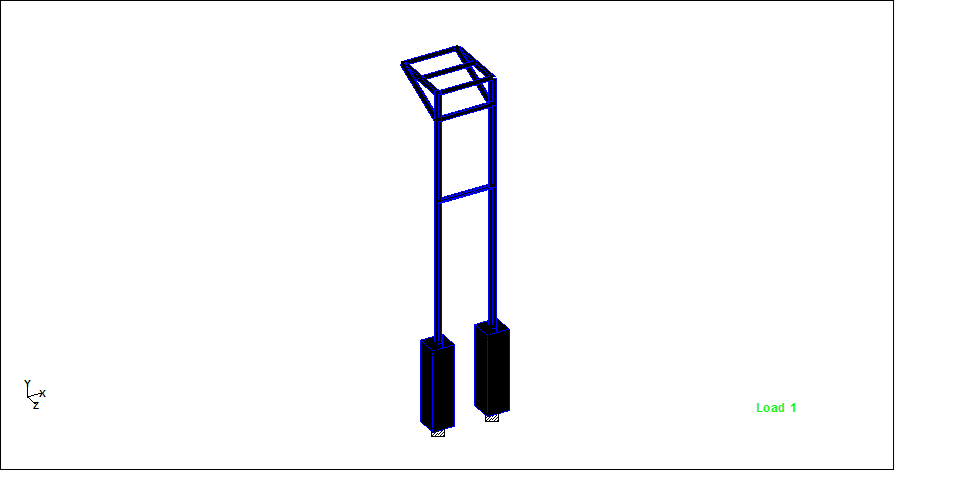
Hello friends, Welcome to Design and Think World .Today, I am discussing Cable Post Supporting Structure Design.   

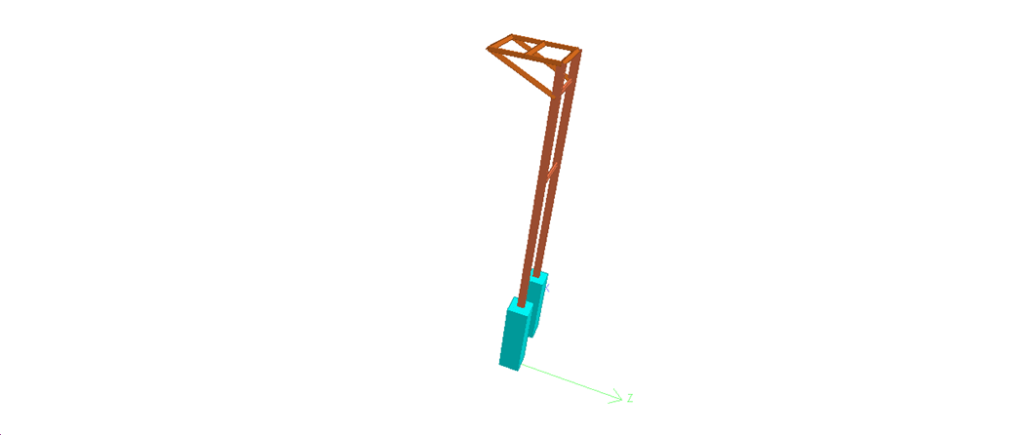
  • Purpose: – It is mainly used in 11/33 kV Distribution project as an overhead supporting arrangement for Cable.
  • Location Selection: –To be determined by the density of existing services, likely disruption to traffic and space requirements for construction of cable post.
  • Dimension: – Height =Normally 4.5 to 5 meter from FGL (assume ) ,Top Platform Size = 1meter *1 meter (assume)
  • STAAD MODEL :- STEEL/CONCRETE both
  • CODAL PROVISION: – Structural steel shall be designed in accordance with the ‘General Construction in steel Code of Practice (IS 800 LSD) & Concrete shall be designed in Concrete code of practice (IS 456:2000).
BAFFLE WALL DESIGN — WELCOME TO DESIGN AND THINK WORLD

3D VIEW

Hello friends, Welcome to Design and Think World .Today, I am discussing RCC baffle wall /Fire Wall. It is usually used either Brick type or RCC Type depending upon Project Requirement

  • Purpose: – It is mainly used in Substation for purpose of limiting the damage and potential spread of fire from a transformer failure.
  • Dimension: – The Dimension of baffle wall may depends upon Site and Project requirement: (i) The Single Transformer Separation 132 & 220 KV: – 6 meter Length & 4.5 to 5.5 meter Height from GL Level. (Assume)
  • The design of RCC Wall   divide into Four section :- (I) Design of Plate  (ii) Design of Column  (iii) Design of Beam  
  • STAAD MODEL :- PLATE /Beam /Column Combined
  • CODAL PROVISION: – Concrete shall be designed in Concrete code of practice (IS 456:2000).

DESIGN OF RCC JOINT BAY WITH LINK BOX CHAMBER- WELCOME TO DESIGN AND THINK WORLD

Hello friends, Welcome to Design and Think World .Today, I am discussing RCC Joint Bay with Link box Chamber. The Joint bay may either Brick type or RCC Type.

  • Purpose: – It is mainly used in EHV Underground Cabling Project for outer protection of Cable joints.
  • Location Selection: – For underground cable projects the joint bay location is selected in order to maximize each section length of cable. The size of the joint bay will be determined by the density of existing services, likely disruption to traffic and space requirements for cable drums and cable pulling equipment. Therefore, are normally located within or adjacent to public roads.
  • Dimension: – The Dimension of Joint Bay may depends upon Site and Project requirement: (i) The Single circuit 220 KV Cable =10 meter length & Width =1.5 to 2 meter for Staggered form joints. (Assume)
  • (ii)The double Circuit 220 KV Cable: – 16 meter Length & 2.5 meter for staggered form joints. (Assume)
  • The design of RCC joint bay  divide into Four section :- (I) Design of Wall (ii) Design of Raft (iii) Design of Haunch  (iv) The design of cover slab may or may not be used . It is depend upon site and Project requirement.
  • STAAD MODEL :- PLATE DESIGN
  • CODAL PROVISION: – Concrete shall be designed in Concrete code of practice (IS 456:2000).

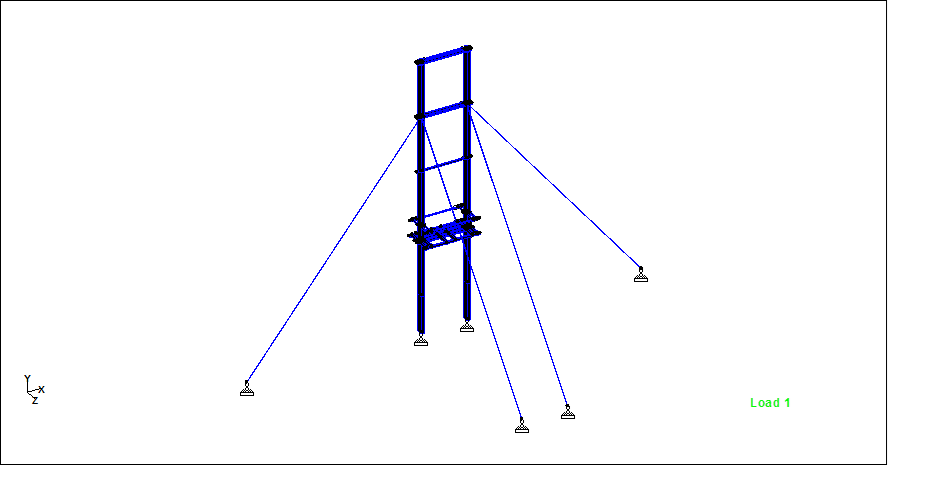
Hello friend ,Welcome to Design and Think World .Today ,I am discussing DT Mounting arrangement on 12 meter DP structure Design .It is used in 11/33 KV distribution.

PANEL SUPPORTING STRUCUTRE, TRANSFORMER SUPPORTING STRUCUTRE, HG FUGE SUPPORTING STRUCUTRE, T CONNECTOR SUPPORTING STRUCUTRE ALONG WITH PCC POLE DESINGED IN STAAD WHICH IS USED IN ELECTRICAL DISTRICBUTION PROJECT.

Note :-

  • In Steel and concrete fixing arrangement in Pole, I  used concrete Between PCC pole and Steel  for load and moment Transformer.
  • Cable wire provide additional support to PCC pole    
  • Mainly Pinned support used in this design  
  • Release  moment Mx & Mz direction

Structural steel shall be designed in accordance with the ‘General Construction in steel Code of Practice (IS 800 LSD) & Concrete shall be designed in Concrete code of practice (IS 456:2000).

Design of electrical equipment which is used in rural and urban electrification.In this design ,we have used single structure for two electrical equipment in Substation.

Introduction :- Structural steel shall be designed in accordance with the ‘General Construction in steel Code of Practice (IS 800 LSD).

Structural analysis and design shall take into consideration, worst combination of the below loads under different phases as mentioned below:

a.      1.5 DL+1.5LL

b.      1.5DL+1.5LL+1.5CL

c.       1.5DL+1.5LL+1.5 SCF(Short Circuit Force)

d.      1.2DL+1.2LL+1.2WLX

e.      1.2DL+1.2LL+1.2WLZ

f.        1.2DL+1.2LL+1.2 SCF+1.2WLX

g.      1.2DL+1.2LL+1.2SCF+1.2WLZ

h.      1.2DL+1.2LL+1.2WLDIAGONAL

i.        1.2DL+1.2LL+1.2WLDIAGONAL+1.2SCF

j.        1.5DL+1.5WLX

k.       1.5DL+1.5WLZ

l.        1.5DL+1.5 SCF+1.5WLX

m.    1.5DL+1.5SCF+1.5WLZ

Where,

D.L. = Dead Load

LL    =    Live Load

C.L. = Cable Pulling Load

Dynamic(Cable Short Circuit Force) =Dynamic Load

EQX = Earthquake in X-direction

EQZ = Earthquake in Z-direction

WLX = Wind Load in X-Direction

WLZ = Wind Load in Z-Direction

Design Calculation-Elevated foundation for Transformer

Basic Design principles: – Structural Concrete shall be designed in accordance with the ‘General Construction in concrete Code of Practice (IS 456 2000 )

BASIC LOAD CALCULATIONS

BASIC LOAD CALCULATIONS

SEISMIC LOAD: – IS 1893(part 1):2002

 Zone Factor: – 0.16

Importance factor: – 1.5

Response reduction Factor: – 5

DEAD LOAD: – (i) Terrace Slab (ii) Parapet Wall load (iii) Self weight

Live Load: – Transformer Load: – 8 Ton

Load Combination

  1. 1.5 D.L. + 1.5 LL.
  2. 1.2 D.L. + 1.2 LL+ 1.2 EQX
  3. 1.5 D.L. + 1.2 LL+ 1.2 EQZ

Other Loading Combination on the Basic of Static Load Analysis    

Where,

D.L. = Dead Load

LL=Live Load

EQX = Earthquake in X-direction

EQZ = Earthquake in Z-direction

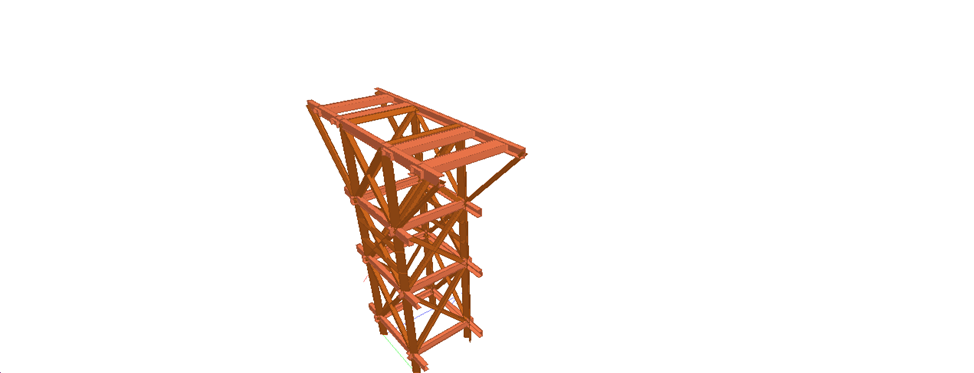
Cable Termination Structure Basic Design Information

3 D VIEW
3 D VIEW
  • Basic Design principles: – Structural steel shall be designed in accordance with the ‘General Construction in steel Code of Practice (IS 800 LSD).
  • Load Combination

         1. 1.5 D.L. + 1.5 C.L.

         2. 1.5 D.L. + 1.0 DYNAMIC

          3. 1.5 D.L. + 1.0 DYNAMIC + 1.0 EQX

          4. 1.5 D.L. + 1.0 DYNAMIC + 1.0 EQZ

5. 1.0 D.L +1.0 WLX

6. 1.0 D.L +1.0 WLZ

7. 1.0 D.L +1.0 WLX + 1.0 CL

8. 1.0 D.L +1.0 WLZ + 1.0 CL

          Where,

                    D.L. = Dead Load

                   C.L. = Cable Pulling Load

                   Dynamic =Dynamic Load

                   EQX = Earthquake in X-direction

                   EQZ = Earthquake in Z-direction

WLX = Wind Load in X-direction

WLZ = Wind Load in Z-direction

  • Dead Load =Self Weight Cable Weight +Termination Equipment Weight +Clamp Weight +Link Box Weight +Earth Strip Weight. Etc.
  • Cable Pulling Load (Tension Load)-

          Applicable for 1 cable at a time

                Tension Load = L*W*f

                Where,

                          L = Length of wire

                           W = Weight of cable

                            f = Co-efficient of friction

  • Dynamic Load

FS= 2*10^-7*IS^2/A

IS= K*(SQRT2)*IC